


Texas A&M Regents’ unanimous vote yesterday cut over 100 courses — on climate, race, and gender — from the core curriculum. And that wasn’t some surprise move from nowhere. It’s the end result of political pressure, donor influence, and a steady push to make public universities answer to insiders instead of students.
Texas A&M’s curriculum fight did not come out of nowhere.
It is what happens when donor money, political pressure, and backroom loyalty begin steering a public university—and when the people responsible try to present the result as a neutral administrative decision.
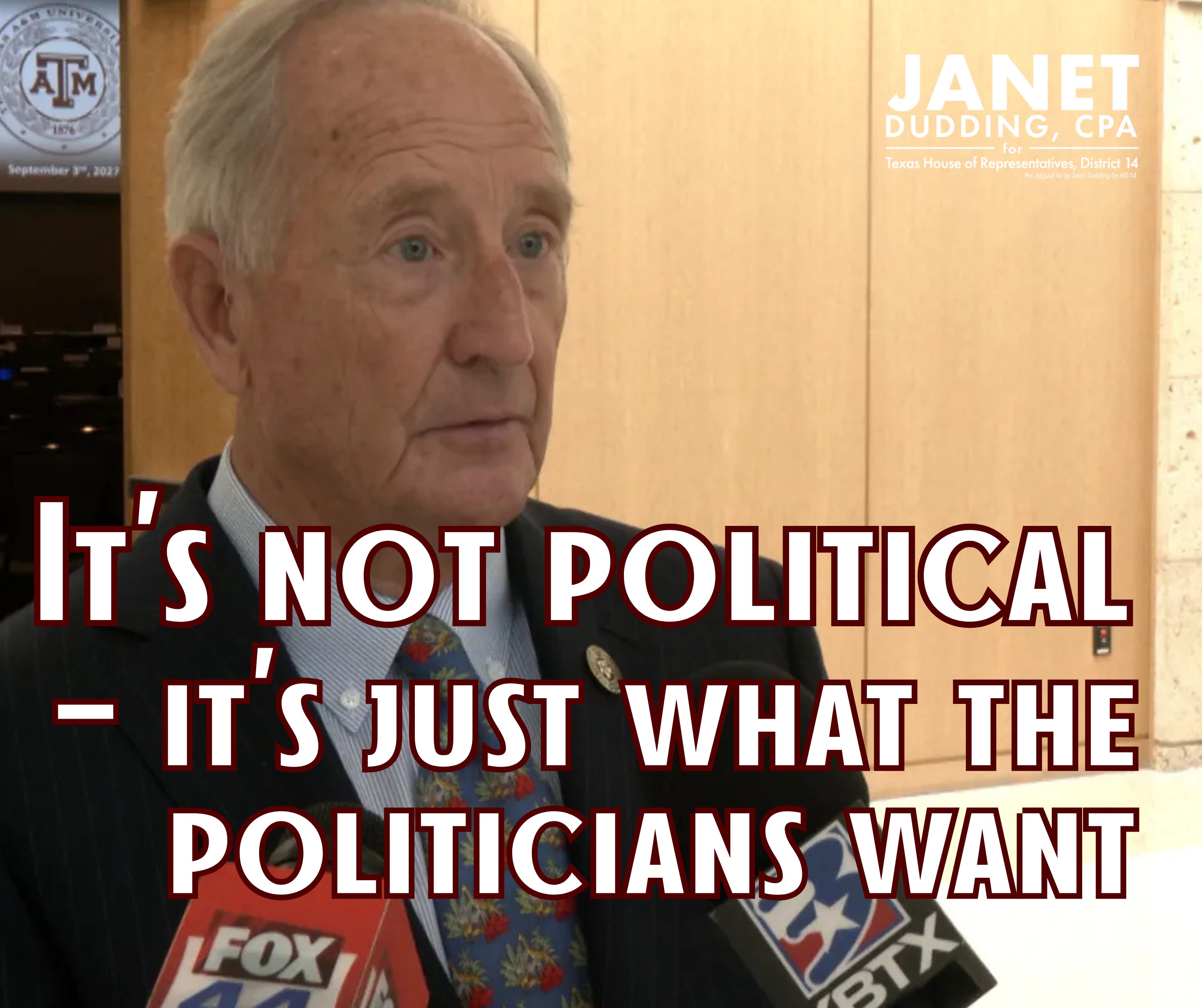
The message from College Station is simple: It’s not political. It’s just what the politicians want.
The Texas A&M System’s own Core Curriculum Review 2026 shows the flagship campus removing more than 100 courses from its approved core curriculum, including Climate Change, Introduction to Women’s and Gender Studies, Introduction to Gender & Society, Gender & Health, and Introduction to Race & Ethnicity.
That is not merely housekeeping. It is a decision about what students should be encouraged to study—and what powerful people would prefer they avoid.
The administration may call it a curriculum review. But removing courses involving race, gender, sexuality, and climate change becomes difficult to describe as apolitical when those are precisely the subjects that Texas politicians and their allies have spent years attacking.
The question is not whether a politician personally selected every course on the list. The question is why these subjects became targets in the first place—and who created the environment in which removing them became the safest institutional choice.
Follow the pressure
The resignation of former Texas A&M president Mark Welsh III helps reveal how that pressure works.
Welsh’s departure was not an ordinary leadership transition. Reporting about the conflict at A&M describes a university president facing pressure from politically aligned regents, outside advocacy groups, donors, and state officials over issues including diversity, equity, and inclusion.
Texas Scorecard repeatedly targeted Welsh. A regent circulated material attacking his record before he became the university’s permanent president. Welsh was taken to meet with Gov. Greg Abbott, where diversity and DEI were among the issues discussed. Lt. Gov. Dan Patrick also played a role in vetting Abbott-appointed regents and pressing questions about alleged “liberal indoctrination” at Texas universities.
Welsh was eventually given a choice: resign or be fired.
After he left, the Rudder Association celebrated his departure. State Rep. Brian Harrison posted, “WE DID IT! TEXAS A&M PRESIDENT IS OUT!!”
That is not what an ordinary academic review looks like. It is what political pressure looks like when it moves through a governing board, an advocacy network, and a university leadership structure that understands the consequences of defying state power.
Welsh’s resignation was the warning sign. The course cuts are the consequence.
Once university leaders understand that defending faculty, resisting online outrage, or refusing to adopt a preferred ideological posture can cost them their jobs, the curriculum does not need to be changed by direct political order. Self-censorship and administrative caution do the work.
Follow the money
The broader donor network matters too.
Tim Dunn has helped finance the political infrastructure behind efforts to reshape public education and higher education in Texas. His donations are part of a larger system in which wealthy donors support candidates, organizations, and campaigns that advance a particular ideological agenda.
That money does not need to come with a written order saying, “Remove this course.”
It can operate through campaign contributions, political organizations, public attacks, donor relationships, board appointments, and the knowledge that certain officials will reward compliance and punish resistance.
The result is still political control, even when the final decision is described as an internal university process.
The chain is not complicated:
Donor money created the pressure. Political networks amplified it. Abbott and Patrick set the direction. Schwertner sponsored it. Dyson voted for it.
Charles Schwertner sponsored several of the bills Paul Dyson voted for, including legislation that increases political control over public universities and places academic freedom under greater pressure. Dan Patrick pushed the agenda. Paul Dyson voted for it.
That is not independent leadership. That is obedience.
Who pays the price?
Public universities are supposed to prepare students for the world as it is.
I moved to Bryan-College Station after Hurricane Katrina devastated my hometown on the Mississippi Gulf Coast because Texas A&M had positioned itself as an international leader in scientific research. I believed in what a strong public university could do for students, families, and communities.
I later returned to the Coast to help oversee financial recovery, rebuild reserves, and restore public operations after the disaster. You do not go through something like that and come away believing climate, infrastructure resilience, disaster planning, and insurance markets are optional topics.
You learn that they shape whether families can stay in their homes, whether cities can recover, and whether public systems can keep their promises.
Texas homeowners are already dealing with steep increases in insurance costs. Disaster exposure, climate risk, reinsurance, and construction costs all affect what families pay and whether coverage remains available.
You cannot lower insurance costs by censoring climate change.
Families do not need a university administrator to tell them whether these issues matter. They see it in renewal notices, damaged roofs, closed roads, stressed water systems, and impossible financial choices.
The same principle applies to race and gender. These are not fringe subjects. They are part of understanding history, law, labor markets, public policy, health care, family life, and civic institutions.
A university core curriculum should expose students to complexity, evidence, and competing ideas. It should not be redesigned to avoid subjects that make politicians uncomfortable.
This is bigger than one campus
Texas A&M sits at the heart of House District 14, but its importance extends far beyond College Station.
A great public university is a research engine, an economic driver, a talent pipeline, and a civic anchor. The decisions made by the Board of Regents shape not only what students learn, but what kind of community and economy we can build around that institution.
When donor money buys influence, when political appointees run interference, and when academic freedom is treated as a nuisance, Texans lose.
Students receive a thinner education. Professors get bullied. Researchers learn to avoid controversial subjects. Public universities become less competitive and less capable of solving the problems Texans actually face.
And taxpayers are left paying for institutions that are being pressured not to tell the truth about the future.
I am a CPA running for Texas House District 14 because I believe public institutions should answer to the people they serve—not to insiders, pressure campaigns, or politicians and donors who believe they know better than the classroom.
My career has taught me to follow the money, measure risk, and ask who bears the cost when government ignores the facts. That is what public leadership should look like, too.
If disaster risk is growing, students should learn about it.
If race and gender shape law, public health, labor markets, and civic life, students should study those subjects honestly.
If governing boards are overstepping their role and narrowing legitimate inquiry, elected officials should say so.
House District 14 deserves representation that will defend public education instead of shrinking it. We deserve leaders who understand that affordability is connected to climate risk, that academic freedom is connected to economic competitiveness, and that honest government depends on facing facts—even when those facts are inconvenient.
Paul Dyson helped build this system. He supported the legislation. He voted for the political structure now being used to pressure Texas A&M.
Schwertner sponsored it. Patrick pushed it. Dyson voted for it.
Texans deserve better than political obedience dressed up as higher education.
Texas does not become stronger by making students less informed.
It becomes weaker, more fearful, and less prepared for the future that is already here.
Call To Action
1. The world has never been changed by bystanders. It has always, only ever, been changed by citizens who decided their voice mattered — and used it.
This is your moment to use yours.
2. You have until October 5 to register to vote in the November 3 election. There is no online voter registration in Texas. Head to votetexas.gov, print the application, sign it, mail it or drop it off. If you’re already registered, use the “Am I Registered?” tool to double-check.
If you’re a US citizen and sleep in Brazos County, Texas, you can vote in Brazos County, Texas, if you register in Brazos County, Texas - and Bryan-College Station-Texas A&M & Blinn, we need your vote! The MSC (Memorial Student Center) on Texas A&M Campus is an early vote site from October 10 - October 30. The MSC is an Election Day site, too. Please register where you reside (sleep) and then VOTE!
3. Early voting in Texas runs October 19 through October 30 and includes a Saturday and Sunday in most counties. Make a plan to vote early to avoid any issues on election day.
4. On November 3, vote James Talarico for U.S. Senate against Ken Paxton. Vote Caitlin Rourk for U.S. Congress District 10 against Elon Musk’s personal attorney, Gober. Vote Gina Hinojosa for Governor against Greg Abbott. Vote Vikki Goodwin for Lieutenant Governor against Dan Patrick. Vote Nathan Johnson for Attorney General against MAGA Mayes Middleton. Vote Sarah Eckhardt for Texas Comptroller of Public Accounts against Don Huffines, the current owner of Epstein’s Zorro Ranch who is closely tied to billionaire donors Tim Dunn and Farris Wilks. Vote Ben Flores for Land Commissioner. Vote Jon Rosenthal for Railroad Commissioner against Bo French. Vote Clayton Tucker for Agriculture Commissioner.
Vote Janet Dudding for Texas House District 14 . Vote Paul Thomasson for Texas Senate District 5, and pay attention to your Texas Judicial races.
5. These are the Judicial candidates to vote for this midterm election:
Chief Justice Supeme Court: Maggie Ellis
Justice, Supreme Court, Place 2: Chari Kelly
Justice, Supreme Court, Place 7: Kristen Hawkins
Justice, Supreme Court, Place 8: Gisela D Triana
Judge, Court of Criminal Appeals, Place 3: Okay Anyiam
Judge, Court of Criminal Appeals, Place 4: Audra Riley
Judge, Court of Criminal Appeals, Place 9: Holly Taylor
Chief Justice, 15th Court of Appeals District: Jerry Zimmerman
Justice, 15th Court of Appeals District, Place 2: Tom Baker
Justice, 15th Court of Appeals District, Place 3: Marc Meyer
6. In Brazos County, there are only two county races that are contested. Brazos County Precinct 4 Commissioner, vote Wanda Watson. Brazos County Precinct 4 Constable, vote Hezekiah Carter, Jr.
Janet Dudding, CPA, is a candidate for Texas House District 14, which includes Texas A&M University. She is a governmental CPA and a lifelong advocate for academic freedom. This post reflects her personal views and analysis. Pol. ad paid for by Janet Dudding for HD-14.